Edge of the Atlantic: The Adventurer’s Guide to the Faroe Islands in Summer 2026
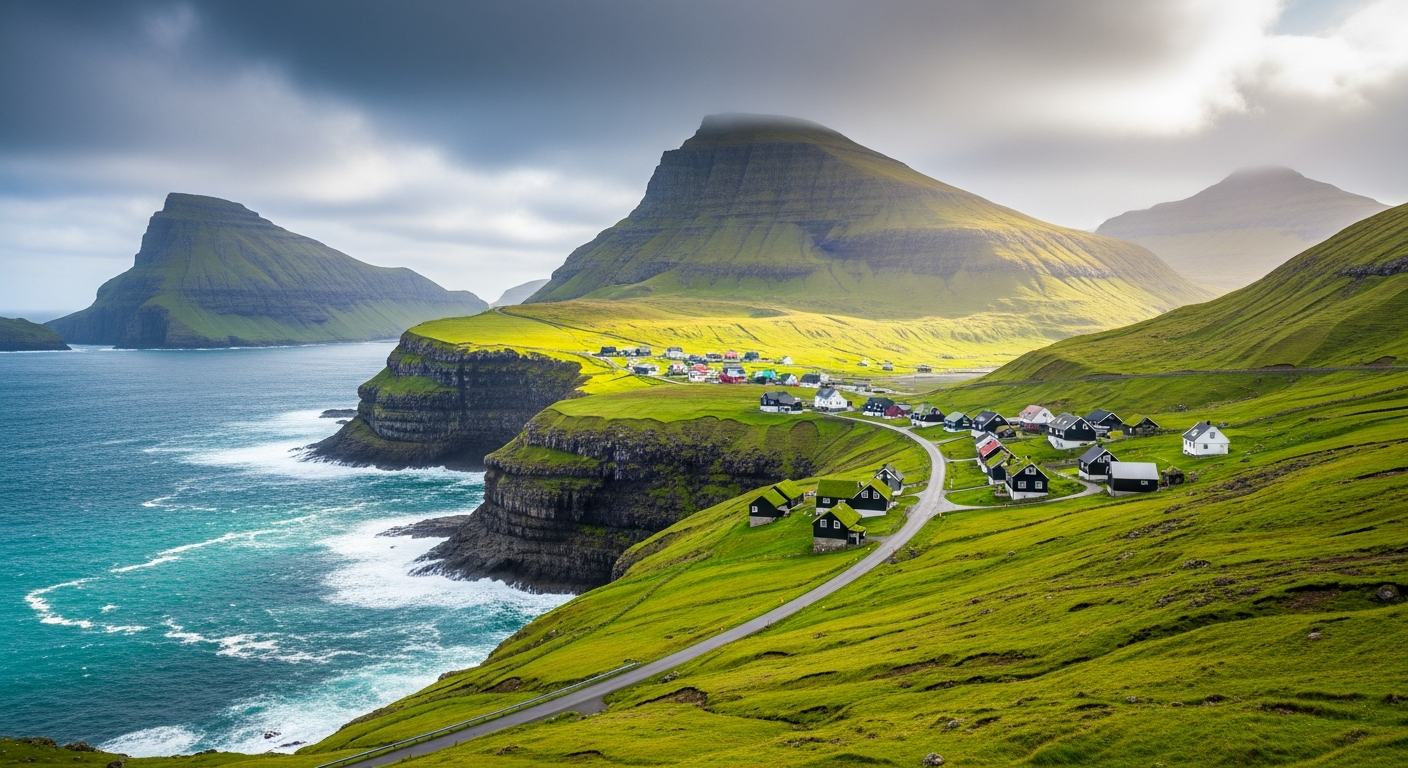
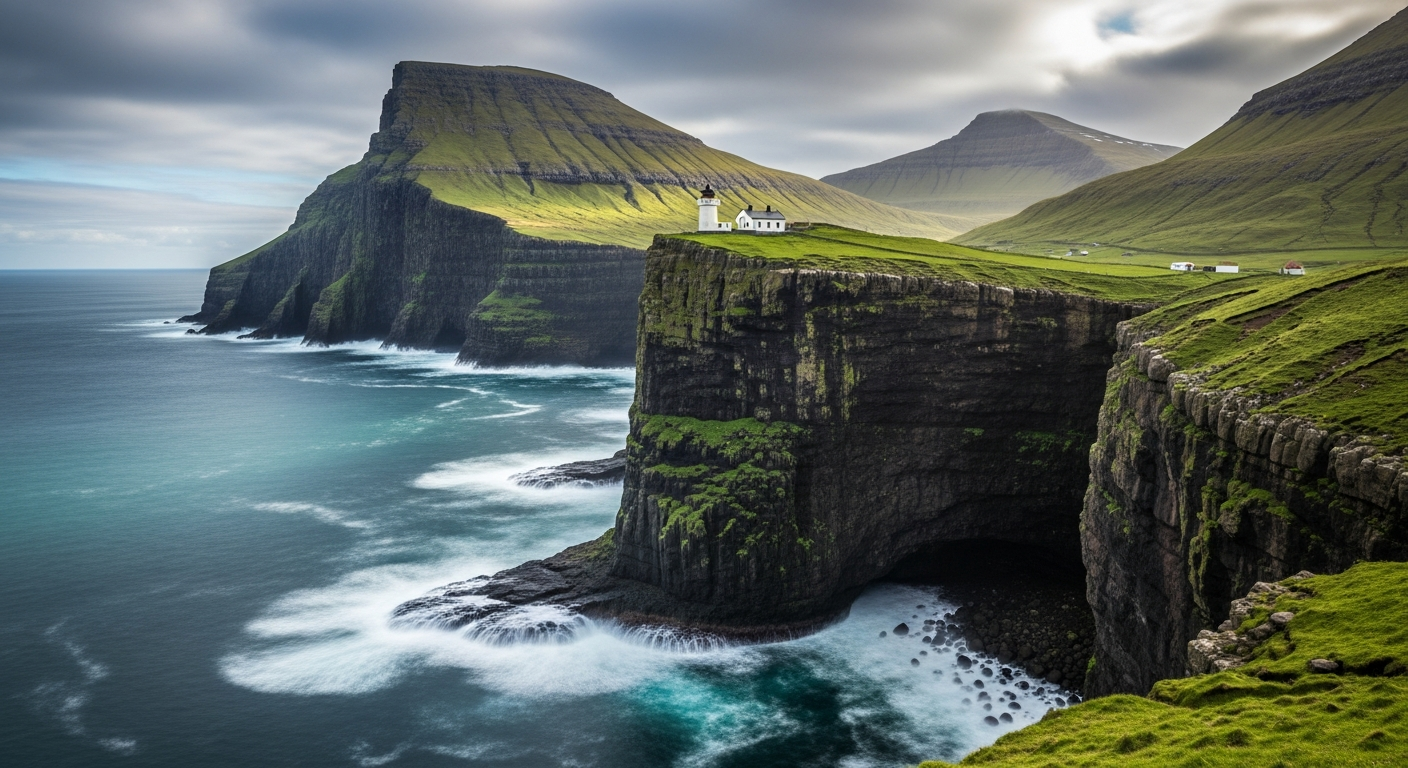
Stand on a sheer basalt cliff in the middle of the North Atlantic, and the boundary between salt spray, low-hanging fog, and solid rock completely vanishes. The wind here carries the heavy scent of wet peat and sea brine, hitting you with the physical force of an open door. Far below, the dark ocean crashes into sea stacks that rise from the water like petrified giants. This is the Faroe Islands: an archipelago of 18 volcanic rocks anchored halfway between Scotland and Iceland. It is a landscape defined by dramatic mood swings, where blinding sunshine can dissolve into a thick, blinding fog in minutes. Today, in the summer of 2026, these islands are greener than ever, buzzing with seasonal energy, and navigating a critical turning point in their relationship with the outside world. Traveling here requires more than just a spirit of adventure; it demands a deep connection with the environment and a willingness to adapt to the shifting rhythms of a wild, high-latitude playground.
Navigating the Green Frontier: New Laws, Hiking Fees, and Mindful Travel
By summer 2026, the Faroe Islands are no longer the North Atlantic's best-kept secret. The challenge of protecting this pristine, high-exposure wilderness has prompted the Faroese government to introduce serious conservation measures. If you are planning an expedition here this season, the rules of engagement have changed. For those seeking our eco-conscious packing checklist to match their sustainable mindset, understanding these updates is the first step of the journey.
Most notably, a new sustainable tourism law came into effect on February 1, 2026. Overnight visitors aged 16 and older staying in hotels, guesthouses, or rental properties now contribute a Sustainability Fee of DKK 20 ($2.90 USD) per night, capped at a maximum of DKK 200 ($29 USD). If you are arriving by sea, cruise passengers pay a flat fee of DKK 65 (~$9.30 USD) per visit. Every Krone collected is funneled directly into a government-managed sustainability fund dedicated to protecting fragile landscapes, maintaining public hiking trails, and managing the environmental impact of foot traffic.
This legislative shift aligns with the "Please Visit Responsibly" campaign launched on July 2, 2026, by Visit Faroe Islands. The initiative is a direct appeal to the adventurous spirit: enjoy the wild, but tread lightly. Travelers are urged to stick strictly to marked paths, minimize noise in nesting bird areas, pack out all trash, and actively support local island businesses.
The Faroese do not just talk about conservation; they live it. During the annual "Closed for Maintenance" voluntourism weekend from April 30 to May 2, 2026, the islands closed to regular leisure tourists. Instead, 80 international volunteers joined 40 locals to dig trenches, clear paths, and build a protective nature reserve fence on the remote island of Koltur. They also spent those three days restoring the historic hiking trail between Tórshavn and Kirkjubøur and fortifying the Nólsoy hiking path against winter erosion. This hands-on ethos is central to our slow travel philosophy, encouraging visitors to give back to the places they explore.
"We are not just maintaining trails; we are preserving a way of life. The Faroe Islands demand a style of travel that is quiet, deliberate, and profoundly respectful of the elements." - Visit Faroe Islands Campaign Director
For independent hikers, understanding the local land tenure system is crucial. Unlike much of Scandinavia, there is no "Right to Roam" (Allemansrätten) here; almost all land is privately owned by local sheep farmers. To walk the most iconic routes, you must pay on-site hiking fees directly to the landowners. If you are heading out to see the dramatic lake over the ocean at Trælanípa and the Bøsdalafossur waterfall on Vágar, expect to pay DKK 450 ($65 USD) per adult. If you are making the pilgrimage to the knife-edge ridge of the Kallur Lighthouse on Kalsoy, the fee is DKK 200 ($29 USD) per adult. Budget for these fees as you would for fuel or food-they are essential for keeping these routes open and safe.
Beyond the Basalt: Undersea Roundabouts, Flight Expansions, and High-Altitude Logistics
Getting to and moving through the Faroe Islands has never been faster, though the sheer scale of the infrastructure remains mind-boggling. Vágar Airport (FAE) recently announced that its annual passenger volume for 2025 hit a record-high 461,064 travelers-more than double the traffic recorded in 2011. To meet this growing demand, Icelandair expanded its services on May 28, 2026, committing to year-round flights to Vágar, including three weekly flights during the harsh winter season. This makes accessing the spectacular terrain of the Faroe Islands viable even for those looking to experience the raw power of the shoulder seasons.
Once on the ground, renting a 4x4 or a sturdy compact vehicle is the gold standard for exploration. Before you pick up your keys, review our essential road trip checklist to ensure you are fully prepared for high-wind conditions and narrow passes. The islands are connected by a marvel of modern civil engineering: a network of deep subsea tunnels carved through solid volcanic rock.

Driving in the Faroe Islands is an adventure in itself, but you must keep an eye on the automated digital tolls. The older tunnels, Vágatunnilin (connecting the airport on Vágar to the main island of Streymoy) and Norðoyatunnilin (connecting Leirvík to Klaksvík), cost DKK 50 one-way for standard vehicles, which is billed automatically via your rental car’s transponder.
The newer, grander tunnels require a larger budget. The massive Eysturoyartunnilin-famous for hosting the world's first and only undersea roundabout, styled like a glowing blue jellyfish-and the 10.8-kilometer-long Sandoyartunnilin cost DKK 175 (~$25 USD) one-way. There are no physical toll booths; cameras scan your license plate, and the fee is processed digitally. Do not try to skip them-the detours by ferry are time-consuming, and the tunnels are the lifeblood of island travel. For photographers looking to capture the striking subterranean architecture, keeping a steady hand is key; check out our ultimate guide to cold-weather photography for tips on managing gear in damp, highly pressurized environments.
Foraging and Festivals: The Culinary and Cultural Renaissance in Tórshavn
When the fog rolls in and the wind forces you off the ridges, Tórshavn, the pint-sized capital, offers a world-class refuge. Far from being a quiet fishing outpost, Tórshavn has evolved into a culinary and cultural powerhouse, proving that the Faroe Islands offer much more than just rugged cliffs and puffins.
The local food scene is currently celebrating monumental international recognition. Restaurant Paz, located in the historic, turf-roofed district of Reyni, has captured global attention by redefining how subarctic ingredients are handled. Here, chefs discard imported luxuries in favor of hyper-local elements: sea urchins harvested from icy fjords, wild sorrel picked from the hillsides, and wind-cured mutton (ræst) that has been fermented in traditional wooden sheds. This dedication to ancestral preservation methods, paired with modern culinary techniques, delivers a dining experience that feels entirely rooted in the Faroese soil.
Beyond the plate, summer in Tórshavn is defined by the energy of the Ólavsøka festival, which takes place in late July. This national holiday transforms the capital into a vibrant sea of red, blue, and green, as thousands of Faroese from every corner of the archipelago gather in traditional dress. The streets ring with the sound of the slankistígi-the hypnotic Faroese chain dance-where participants sing unaccompanied medieval ballads (kvæði) that recount centuries of Norse history. It is a striking contrast to the quiet solitude of the outer islands, reminding travelers that these volcanic rocks host a culture as resilient and deeply weathered as the cliffs themselves. Whether you are navigating a sheer ridge in the northern islands or raising a glass of local craft beer in a cozy Tórshavn pub, the Faroe Islands in 2026 offer a rare look at a place that knows exactly what it is, and is fiercely committed to keeping it that way.