Swept Away by the Bay: The Radical Guide to Chennai's marina Beach
The Soul of Chennai’s Coastline: Exploring India’s Longest Urban Beach
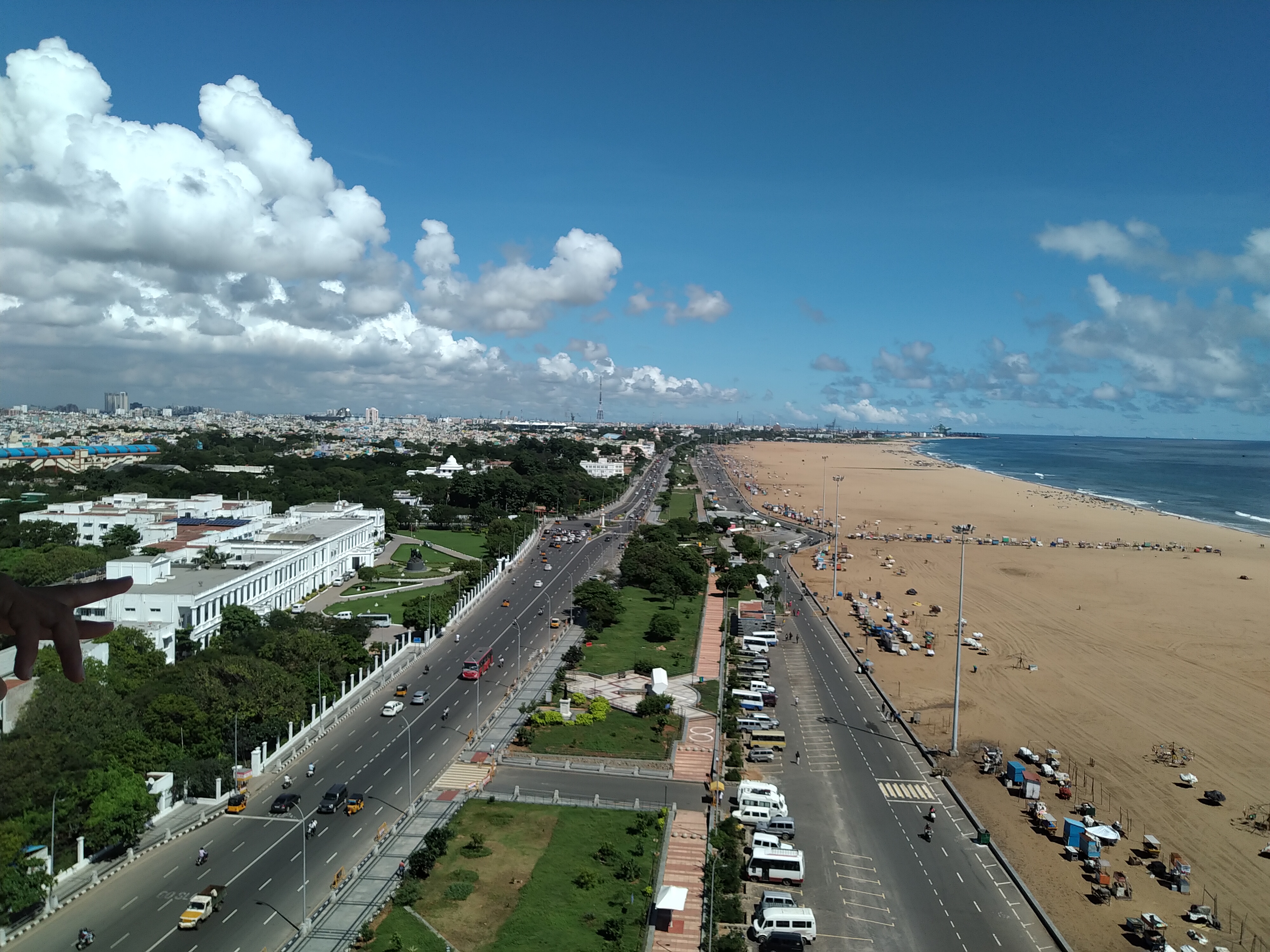
Thirteen kilometers of uninterrupted golden sand run along the edge of the Bay of Bengal, forming a massive natural barrier between the chaotic sprawl of Chennai and the open ocean. This is Marina Beach. It is not just a geographical strip; it is Chennai’s communal living room, a sprawling civic arena where the city comes to breathe. On any given afternoon, the beach transforms into a high-energy theater of local life. Children chase cricket balls through the surf, kite-flyers fight the offshore winds, and street vendors hawk plates of fiery milagai bajji (deep-fried chili fritters) from wooden carts. For those arriving from overseas, the beach offers a visceral introduction to Tamil Nadu: a heady mix of salt air, diesel fumes, frying spices, and the relentless roar of the tide.
If you are planning to tackle this coastal giant right now in mid-July 2026, you need to prepare for a brutal climate reality. Chennai is currently locked in the grip of its most punishing summer heatwave since 2015. Daytime temperatures consistently hover between 38°C and 39°C (100°F-102°F). However, the real adversary is the staggering coastal humidity, which routinely pushes the heat index-how hot it actually feels-past a suffocating 45°C (113°F). Walking onto the sand at noon is akin to stepping into a blast furnace.
To survive and enjoy Marina Beach under these conditions, tactical timing is everything. Set your alarm for 5:30 AM and aim to reach the shoreline by 6:00 AM. At this hour, the beach belongs to early-morning runners, fishermen launching their wooden catamarans into the breaker waves, and a mercifully cool breeze. The sunrise here is spectacular, breaking over the horizon in deep hues of amber and violet. Once the sun climbs high, find air-conditioned shelter. Do not return to the shore until at least 3:00 PM, when the evening sea breeze begins to push back against the inland heat. For a deeper dive into managing extreme weather on the road, read our extreme heat travel tips.
Modern Megaprojects and the Battle for Eco-Certification
Marina Beach is currently undergoing a massive, multi-million-dollar facelift. The local municipality has earmarked 121 acres of prime oceanfront for a phased, sustainable development project aimed at balancing tourist infrastructure with ecological preservation. Travelers walking the promenade today will see the dramatic results of this heavy state investment split across three distinct zones.
Phase 1, which opened in September 2025 near the Marina Swimming Pool, cost ₹7.31 crore (roughly $880,000 USD) and covers 25 acres of manicured beachfront. Built to handle crowds of up to 60,000 people a day, this section introduced eco-friendly amenities designed to blend into the coastal landscape, including 20 elegant bamboo shade huts, 40 heavy-duty recliner chairs, and elevated watchtowers for the city's lifeguards.
Walk further south, opposite the striking red facade of Vivekananda House, and you will find Phase 2. This ₹7-crore section launched in late February 2026, adding 30 bamboo umbrellas, 60 matching seats, dedicated photo points, and quiet zones designed for reading and reflection away from the main commercial hustle. The final piece of the current puzzle, Phase 3, opened in late May 2026 behind the historic Anna Memorial. Built at a cost of ₹6 crore, this 20-acre zone focuses on wide-open public plazas and designated children’s play areas, leaving the sand uncluttered by permanent structures.
Despite this aggressive modernization, the city’s green ambitions hit a major snag today, July 13, 2026. Local authorities officially confirmed that Marina Beach has failed to secure the prestigious international Blue Flag eco-certification. While the land-side amenities met the strict criteria, the sea itself failed the water-quality tests. The culprit remains untreated urban runoff and sewage flowing into the sea from the nearby Cooum River estuary. This environmental setback, reported this morning by The Hindu, highlights the massive challenge of managing waste in a rapidly expanding megacity. For those interested in minimizing their footprint while exploring fragile coastlines, refer to our sustainable coastal travel guides.
Looking forward, Chennai has even bolder infrastructure projects on the horizon. The city’s February 18, 2026 budget allocated funds for a feasibility study to construct a public-private partnership (PPP) tourist ropeway. This aerial cable car would glide directly above the beach, offering riders panoramic views of the Bay of Bengal as it runs between the Marina Lighthouse and the Anna Memorial. To keep the ground level from turning into an unregulated bazaar, the Madras High Court stepped in on January 20, 2026, enforcing a strict cap that limits active beach vendors to just 300 licensed stalls, all restricted to designated, organized zones.

Practical Navigation: Accessibility Shifts, Lighthouses, and Ocean Safety
Successfully navigating Marina Beach requires a solid understanding of the local geography, recent infrastructure updates, and the natural hazards of the Indian Ocean. Before packing your daypack, consult our essential India packing list to ensure you have the right gear for the intense tropical sun.
One of the most significant and debated changes on the beach is happening right now. Between July 11 and July 13, 2026, crew workers from the Greater Chennai Corporation (GCC) began dismantling the beach’s famous 263-meter-long wooden accessibility ramp. Originally constructed in November 2022 for ₹1.14 crore ($137,000 USD) using premium imported Brazilian timber, the ramp allowed wheelchair users and those with mobility challenges to roll directly across the soft sand to the water’s edge. Unfortunately, three years of relentless exposure to corrosive salt spray, high humidity, and shifting wet sand rotted the wooden supports, making the structure unsafe.
In its place, the GCC plans to roll out heavy-duty, high-density polyethylene (HDPE) modular mats and ramps later this month. While city engineers argue that these synthetic mats will withstand the harsh marine environment far better than timber, the move has drawn sharp criticism from local disability rights advocates. Many argue that temporary plastic mats lack the stability, dignity, and ease of independent use that the permanent wooden boardwalk once provided.
Further down the shoreline, near the southern end of the promenade, stands the Marina Lighthouse. Standing 46 meters tall, this striking red-and-white striped triangular concrete tower is one of the few lighthouses in India equipped with an internal elevator. For a small fee, visitors can ride to the top viewing gallery for an unparalleled, 360-degree view of the Chennai skyline and the vast, curving expanse of the beach below. It is an absolute must-visit for any photographer looking to capture the sheer scale of the city.
Finally, a critical safety warning: do not swim in the water. Despite the tempting heat and the crowds of locals wading in the shallows, the Bay of Bengal along Marina Beach is notorious for treacherous rip tides, sudden drop-offs, and powerful undercurrents. The beach is strictly a non-swimming zone, and local police patrol the shoreline regularly to enforce this rule. Stick to wading ankle-deep, enjoy the sea breeze, and save your swimming for supervised pools. Marina Beach is an unpredictable wild space; treat its waters with the respect they deserve.