Chasing the Sleeping Buddha: The Ultimate Guide to the Sandakphu Trek in 2026
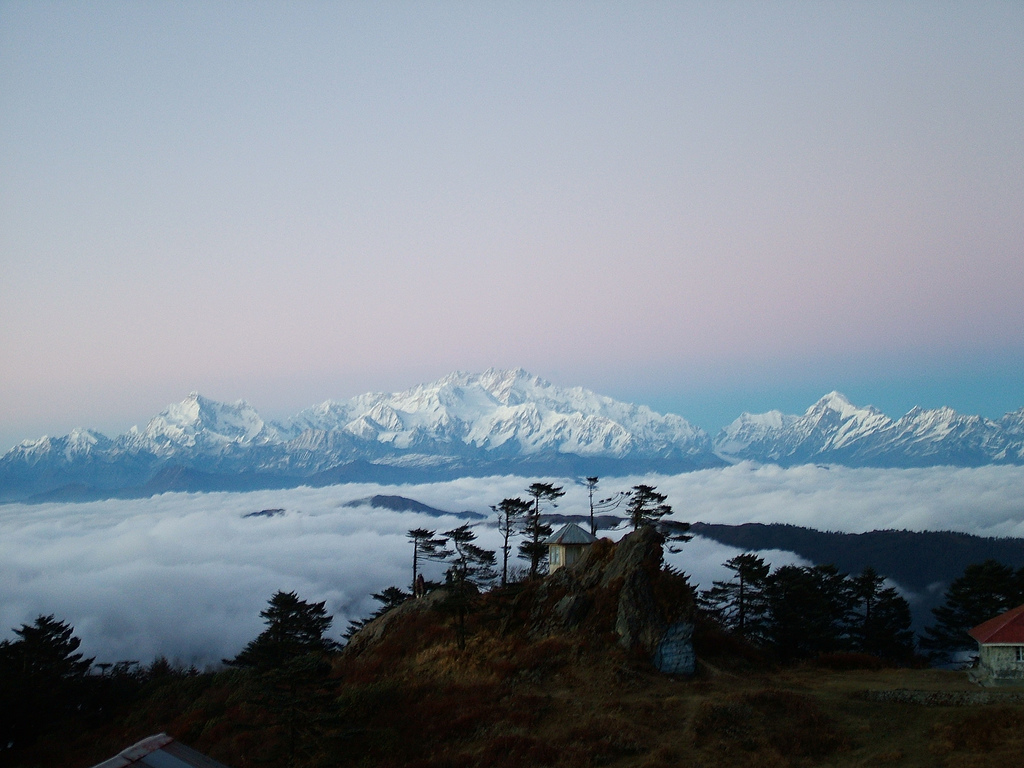
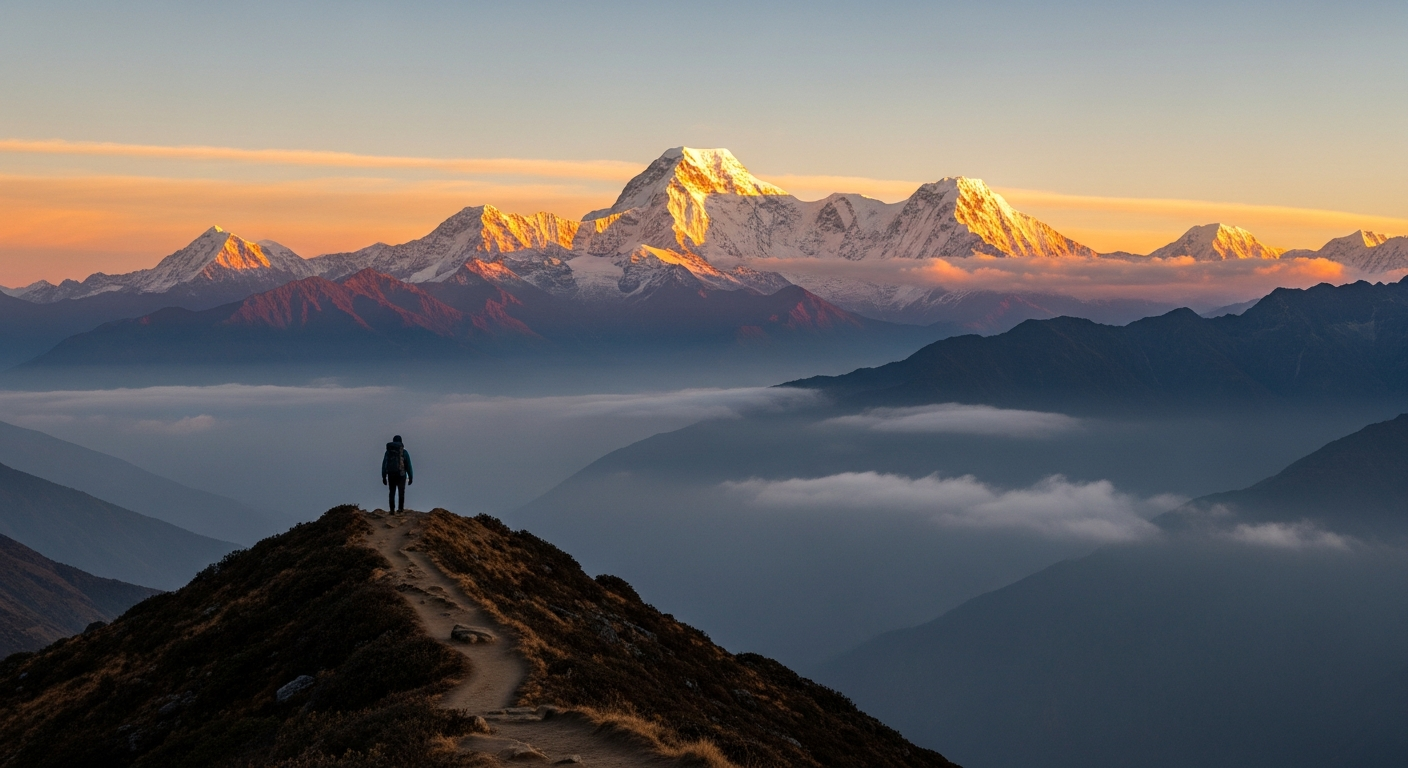
At 3,636 meters on the Singalila Ridge, the world contracts to a single, razor-sharp horizon. Step onto the summit of Sandakphu-the highest point in West Bengal-and you find yourself looking at the very backbone of the Earth. Four of the world’s five tallest peaks stand in a monumental line: Everest, Lhotse, Makalu, and the colossal Kanchenjunga. Together, their jagged, glacier-draped peaks form the "Sleeping Buddha," a celestial profile of a reclining deity traced across a high-altitude sky of deep cobalt and brilliant white.
If you are reading this in mid-July 2026, the high ridges are silent. Singalila National Park and its network of trails are locked down for their annual monsoon hibernation, closed from June 16 to September 15. Heavy Himalayan rains, sudden landslides, and aggressive leeches reclaim the high country during these months. Yet, this quiet window is the perfect time to plan. On September 15, 2026, the gates reopen. This launches the highly prized autumn trekking season, when post-monsoon winds sweep the atmosphere clean, leaving razor-sharp skies and unobstructed views of the Sleeping Buddha.
For the modern mountain traveler, the Sandakphu Trek (West Bengal) is an essential Himalayan pilgrimage. It is a borderland journey, weaving along the frontier of India and Nepal through old-growth rhododendron forests, windswept high-altitude meadows, and tiny, isolated border settlements. Whether you want to test your lungs on steep gravel climbs or witness the most dramatic sunrise on the planet, planning your 2026 trek requires an up-to-date grasp of local rules, trail realities, and eco-regulations.
The Ridge of Giants: Why Sandakphu is India’s Ultimate Skyline Trek
What makes the Sandakphu trek unique is its geography. Unlike deep-valley treks where peak views remain hidden until the final climb, Sandakphu is a pure ridge walk. Almost from the moment you leave the dense bamboo forests on day two, you are walking the spine of the Singalila Ridge. Look left, and you see the rolling terraced hills of Nepal. Look right, and the dramatic, deep valleys of West Bengal and Sikkim drop away into the mist.
The centerpiece of this trek is the morning show from the Sandakphu summit. As dawn breaks, the first light hits the eastern sky, painting the Kanchenjunga massif in shades of pale rose, which deepens to molten gold before settling into a cold, brilliant white. The massive formation perfectly resembles a reclining human form-the head, chest, and knees of the Buddha resting in the heavens. Just to the left, the dark, triangular pyramid of Mount Everest stands beside Lhotse and Makalu. There are few places on earth where you can view these giants of mountaineering history in a single glance without undertaking a grueling, multi-week expedition.
But the grand panoramas are only part of the story. If you hike in the spring window (April to May), the entire forest erupts with red, pink, and white rhododendrons, accented by delicate magnolias. Choose the autumn window from late September, and the slopes turn amber and gold under crisp, clear blue skies.
The trail is also a sanctuary for rare wildlife. Singalila National Park protects the elusive red panda, the Himalayan black bear, and hundreds of species of high-altitude birds. Trekking here is a slow, meditative process. The only sounds are the flutter of Buddhist prayer flags and the metallic chime of yak bells echoing through the mist. To prepare your body for the thin air, read our guide to high-altitude acclimatization to keep your energy levels steady throughout the climb.
Navigating the New Rules: Permits, Pricing, and Eco-Regulations in 2026
The wild beauty of the Singalila Ridge has faced severe pressure from over-tourism in recent years. In response, local authorities have cracked down with strict conservation and safety rules. The biggest shift occurred on June 15, 2025, when the Gorkhaland Territorial Administration (GTA) Tourism Department declared Sandakphu, Singalila National Park, and the gateway town of Manebhanjan strict "plastic-free zones." Forest Department rangers enforce this actively. They perform random baggage checks at entry points and issue heavy fines to anyone carrying single-use plastic water bottles, packaged snack wrappers, or plastic shopping bags. Use reusable dry bags to organize your gear, carry a high-quality thermal water flask, and commit to leaving no trace. You can read more about sustainable backcountry practices in our Leave No Trace guide.
Logistics for guides and permits are simple if you know the current 2026 framework. You cannot trek independently past major checkpoints like Tumling or Dhotrey. Hiring a registered local guide is mandatory. These must be sourced through authorized local associations, such as the Highlander Guides and Porters Welfare Association in Manebhanjan. The fixed, non-negotiable daily guide rates for 2026 are:
- Indian Groups: ₹1,000 per day.
- Foreign National Groups: ₹1,200 per day (covers groups up to seven trekkers, making it highly economical for small groups).
National park entry permits must be purchased at the gate. For the 2026 climbing season, permit fees are:
- Indian Citizens: ₹200 per person.
- Foreign Nationals: ₹500 per person.
- Camera Fees: ₹100 for digital still cameras, and ₹400 for video cameras (smartphones are exempt from these fees).
To get through the forest checkpoints without delays, you must carry original government-issued photo identification (Aadhaar, Passport, Voter ID, or Driver's License). Note that PAN cards are not accepted. You will also need 3 to 4 passport-sized physical photos for the registration logbooks along the trail. Foreign nationals must secure a Restricted Area Permit (RAP) or Inner Line Permit (ILP) ahead of time from the Darjeeling District DM’s office before arriving at the trailhead. For real-time regional travel updates, consult the West Bengal Tourism Official Portal.
Logistics on the Trail: Routes, Rugged 4x4s, and Budget Planning
The classic route for the Sandakphu Trek begins in the bustling hub of Manebhanjan (roughly a four-hour drive from Siliguri or Darjeeling) or the quieter forest hamlet of Dhotrey. From Manebhanjan, the trail climbs steadily through Chitrey, Lameyadhura, Meghma, and Tumling before pushing on to Sandakphu. While the lower trail up to Gairibas is now paved with concrete, don't let that fool you. The final 12-kilometer push to the Sandakphu summit is a brutal, steep ramp of loose gravel, exposed rock, and relentless switchbacks that will test your knees and lungs. Quality footwear is non-negotiable on these mixed surfaces; check out our roundup of the best hiking boots of 2026 to find the right support for your ankles.
Sandakphu is also famous for its vintage automotive history. For decades, a fleet of classic, British-era Series Land Rovers served as the only lifeline up these steep gradients. However, due to a severe shortage of spare parts and modern safety mandates, these historic vehicles are being phased out or repowered with newer Mahindra engines. Today, the workhorses of the trail are tough Mahindra Boleros and similar 4x4s managed by the Singalila Land Rover Owners' Welfare Association. If you opt for a vehicle safari rather than a foot trek, a reserved round-trip from Manebhanjan to Sandakphu in a registered 4x4 is fixed at roughly ₹4,800, with an additional mandatory overnight charge of ₹1,000 per night for the driver and vehicle.
For those mapping out their budget, the cost of a Sandakphu Trek (West Bengal) in 2026 falls into three clear tiers:
Package Type Estimated Cost (INR) What is Included?
| Standard 6-Day/5-Night Package | ₹12,000 - ₹13,000 | Organized by registered agencies (like Bikat Adventures or Himalayan Hikers); includes meals, homestays, guides, and national park permits. |
|---|---|---|
| Quick 4-Day/3-Night Package | ₹9,500 | An accelerated itinerary focusing on the direct route to the summit and back without extending the trek to Phalut. |
| Self-Guided / DIY Budget | ₹5,900 - ₹9,000 | Independent trekking; booking local homestays on the fly and hiring your mandatory guide directly at the trailhead. |
This range of options makes the Sandakphu Trek one of the most accessible, culturally rich high-altitude adventures in the Himalayas. As the monsoon rains clear, gather your gear, map your route, and prepare to stand face-to-face with the giants of the world this autumn.